Fermat's Last Theorem
Fermat's Last Theorem — Exploring Opposites and Harmony
The Famous Theorem
Pierre de Fermat noted in the margin of a book: "It is possible to have a square be the sum of two
squares, but that a cube cannot be the sum of two cubes."
He claimed a proof, but it remained unsolved for 358 years until Andrew Wiles proved it in 1995.
The Pythagorean Connection
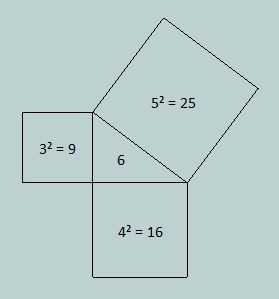
The Pythagorean theorem allows squares: a² + b² = c² (e.g., 3-4-5 triangle).
But for higher powers, no solutions exist.
Opposites and Balance
The theorem holds — until we consider the "invisible opposite.
"Two opposite units can combine into one balanced reality — visible and invisible married together.
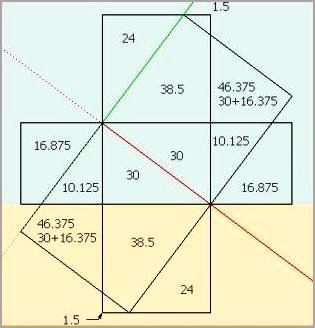
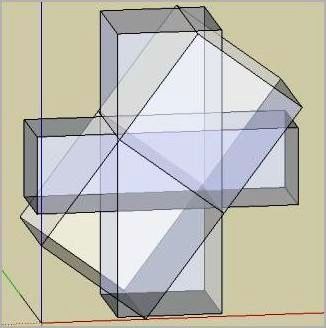
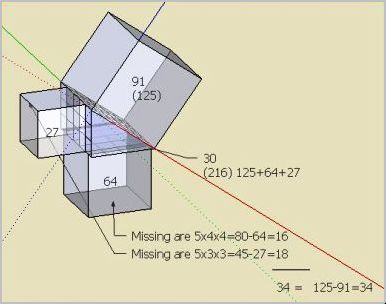
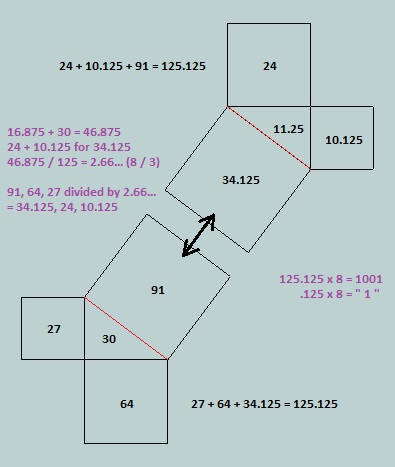
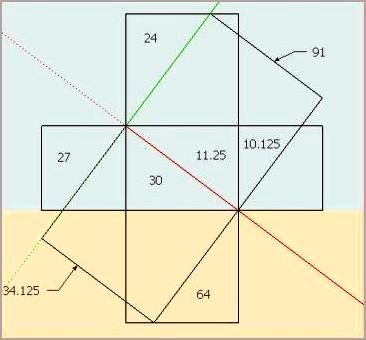
Using 3-4-5 Pythagorean cubes, the missing half is its opposite reality.
Numerical Explorations
345 + 543 = 888
Center 30 + 11.25 = 41.25 × 8 = 330 + "1" = 331 (related to light: 3 + 3 + "1" = 7)
30 14 11.25 / ϕ 1.6180339887...≈ the speed of light c ≈ 186282.397...

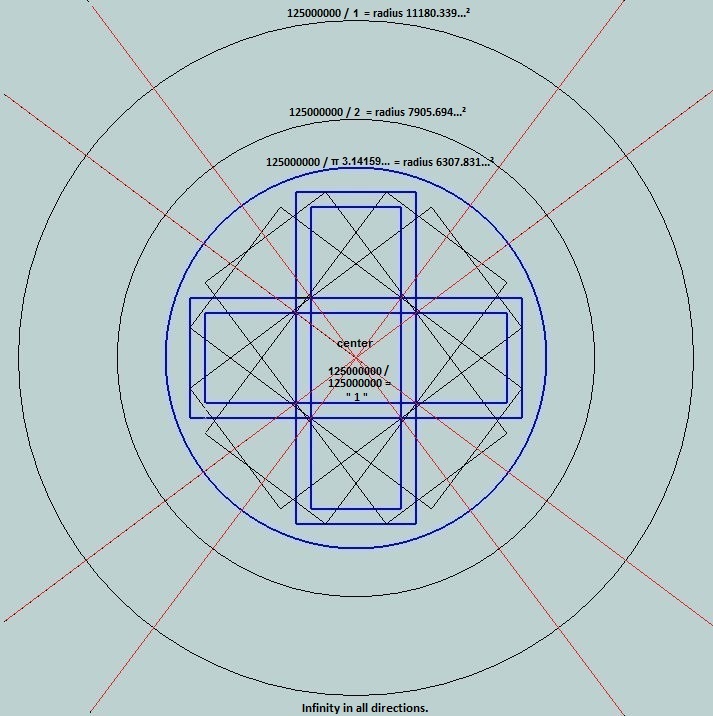
Eight of these 3-4-5 cubical units × 0.125 = 1 — blending opposites into one balanced unit.

Biblical and Deeper Meaning
A verse speaks of the end time: "there should be time no longer" (Revelation 10:6).
If time stops, entropy (disorder) ends — no aging or decay.
The first law of thermodynamics says energy is neither created nor destroyed — it changes form.
This suggests perfect harmony: what seems gone is still there — the original creation endures.
The soul and spirit remain as the original unit when the body returns to dust (1 Corinthians 15:44: "there
is a natural body, and there is a spiritual body"; v.49: "we shall also bear the image of the heavenly").
Open Wonder
These ideas blend mathematics, opposites, and timeless harmony — exploratory patterns inviting thought.
Fermat's theorem reveals limits in one realm, but opposites suggest balance beyond.